Comprehending Peptide Purity: What 99%+ Truly Indicates
Peptide Top Quality: Value Of Third-party Recognition
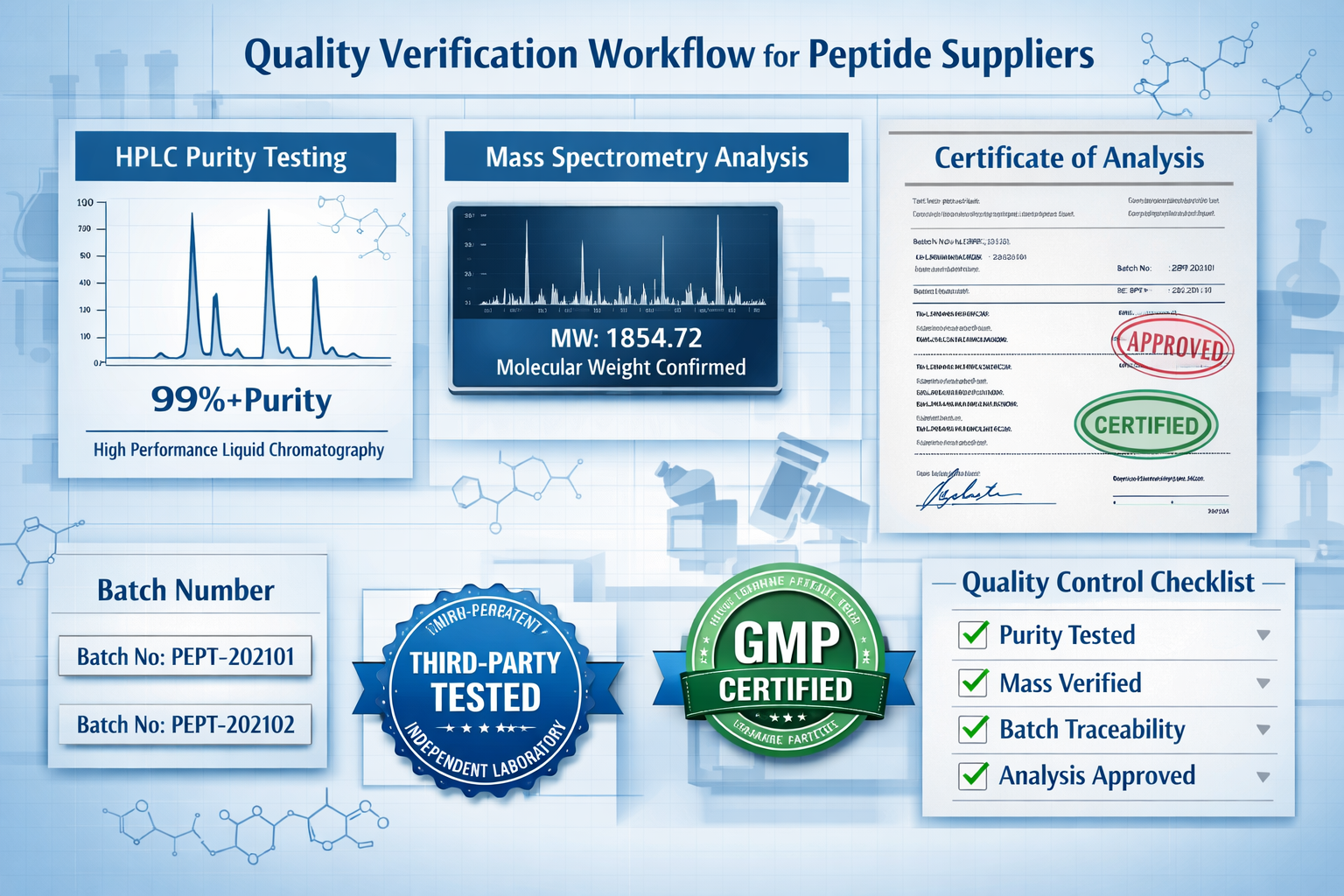
An example can create a clean-looking chromatogram with one dominant peak and still be the wrong substance if identification was never ever verified. HPLC procedures separation and family member peak area; mass spectrometry measures mass-to-charge habits that can be made use of to validate molecular identity. Peptide purity testing is the process of verifying that a peptide example consists of just the intended sequence-- and no substantial pollutants or by-products from synthesis. Since peptides are created through complicated chemical procedures, trace pollutants can create normally. Checking allows researchers to comprehend precisely what's in the vial, verifying both identity and quality. Picking a trusted third-party lab is key to getting reliable peptide validation results.
Mass Verification
- Together, HPLC and MS information permit experts to verify that the peptide's structure matches what it ought to be (correct amino acid sequence and anticipated alterations) which no considerable impurities are present.
- Methionine can be oxidized to methionine sulfoxide; cysteine can develop unwanted disulfide bonds or be oxidized to sulfinic or sulfonic acid derivatives.
- Likewise, bear in mind that "research-grade" peptides are suggested for the laboratory bench and include high purity and identity checks but are not produced as medicines.
- If the target peptide's peak represent 99.1% of the total top location, the peptide is reported as 99.1% pure by HPLC.
- BOC Sciences, with its robust logical platform and professional group, concentrates on high quality screening solutions for peptide resources, peptide microspheres, peptide nanoparticles, and peptide formula preparations.
The liquified peptide example is infused right into a stream of fluid solvent (the mobile stage) that flows through a tube packed with tiny particles (the stationary phase). Various particles "stick" to those particles with different strengths, so they travel with the column at various rates. Refined differences in resources pureness and framework can result in variances in the activity of the final product.
Applications Of Our Specialist Peptide Screening Services
BOC Sciences uses extensive peptide screening solutions to customers throughout markets, ensuring items fulfill rigorous market needs and assuring product uniformity, safety and security, and efficiency. It also supports traceability-- each batch's lab validation report can be tied to its COA and governing filings, developing a clear paper trail. In other words, strenuous lab recognition is exactly how you show to regulatory authorities that your peptide fulfills all top quality specifications. It aids prevent compliance issues such as stopped working audits or item remembers because of top quality defects. This not only pleases legal demands yet eventually shields patient safety and security.
Picking the right external lab for peptide testing includes assessing a number of factors. A trusted laboratory needs to have verifiable experience in peptide chemistry analysis-- for example, PhD-level chemists or biochemists on staff that recognize peptides' synthesis and deterioration pathways. Accreditation by appropriate bodies (such as ISO/IEC or qualification for GLP/GMP conformity) is a solid sign of high quality.
Examinations can be carried out utilizing high-precision stabilization chambers, mimicing various settings, and applying global standards to examine short-term and long-lasting security, important for regular peptide efficiency. Some peptides stop working not because the series is incorrect, but due to the fact that their physical behavior in real solvents is poorly comprehended. We supply physical building testing that assists groups function better with tough samples. Mass spectrometry confirms whether the determined mass matches the anticipated peptide mass. The chromatogram is the most essential visual data component on an HPLC peptide examination record. It is a chart with time on the straight axis and detector response, normally UV absorbance, on the upright axis. These are beneficial in the appropriate setup, however they ought to be taken method-specific proof instead of an universal replacement for HPLC and MS. Yet peptide pureness is arguably the single crucial high quality statistics for any research study peptide. It straight impacts the dependability and reproducibility of experimental outcomes. A peptide provided at 75% purity and one at 99% purity aren't just various qualities-- they can create meaningfully various results in the very same assay.